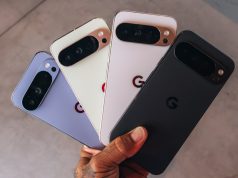
Best Smartphones of 2025 has been a weird and wonderful year for smartphones. It’s the first time that you can buy an ultra thin phone that won’t snap like a bread stick. A normal looking phone with a battery large enough to power a small vehicle or a triple folding phone, even if it does happen to cost you and your entire family’s kidneys. But which ones should people buy? Welcome to the heavily revamped best smartphones of the year.
The Glow-Up Award:
Most Improved Phone
Starting with the Glow Award, the most improved phone from last year. And I’d say there are two and only two obvious contenders here.
So, Samsung’s Galaxy ZFold 7 feels like a massive change simply because of how much slimmer and lighter it is than the ZFold 6 while also bumping up pretty much all of its specs at the same time. This one generation is more than the difference in thickness between the last four generations of Samsung folds put together.
And then the one that beginning of this year I would have predicted to be the last phone to be sitting in this category, the iPhone. Not the 17 Pro, not the Pro Max, but the base iPhone 17. I distinctly remember casually strolling into the Apple event this year, being totally prepared for there to be like two changes maxed to this phone like they usually are, only to end up scurrying out of there a couple of hours later when it finished, trying to piece together my entire page of notes.
Basically, everything about the phone got better. They took the screen from easily the weakest in its price segment to probably the strongest and even doubled the base storage of the phone without touching the price. It’s enough improvements that ultimately I’m going to give the glow-up award to the iPhone. There’s never been such a sudden obvious best time to upgrade.
The Outside the Box Award: Most Unique Features
Now, onto something new this year, the outside the box award. A phone that has some kind of unique trait, but that actually makes it better.
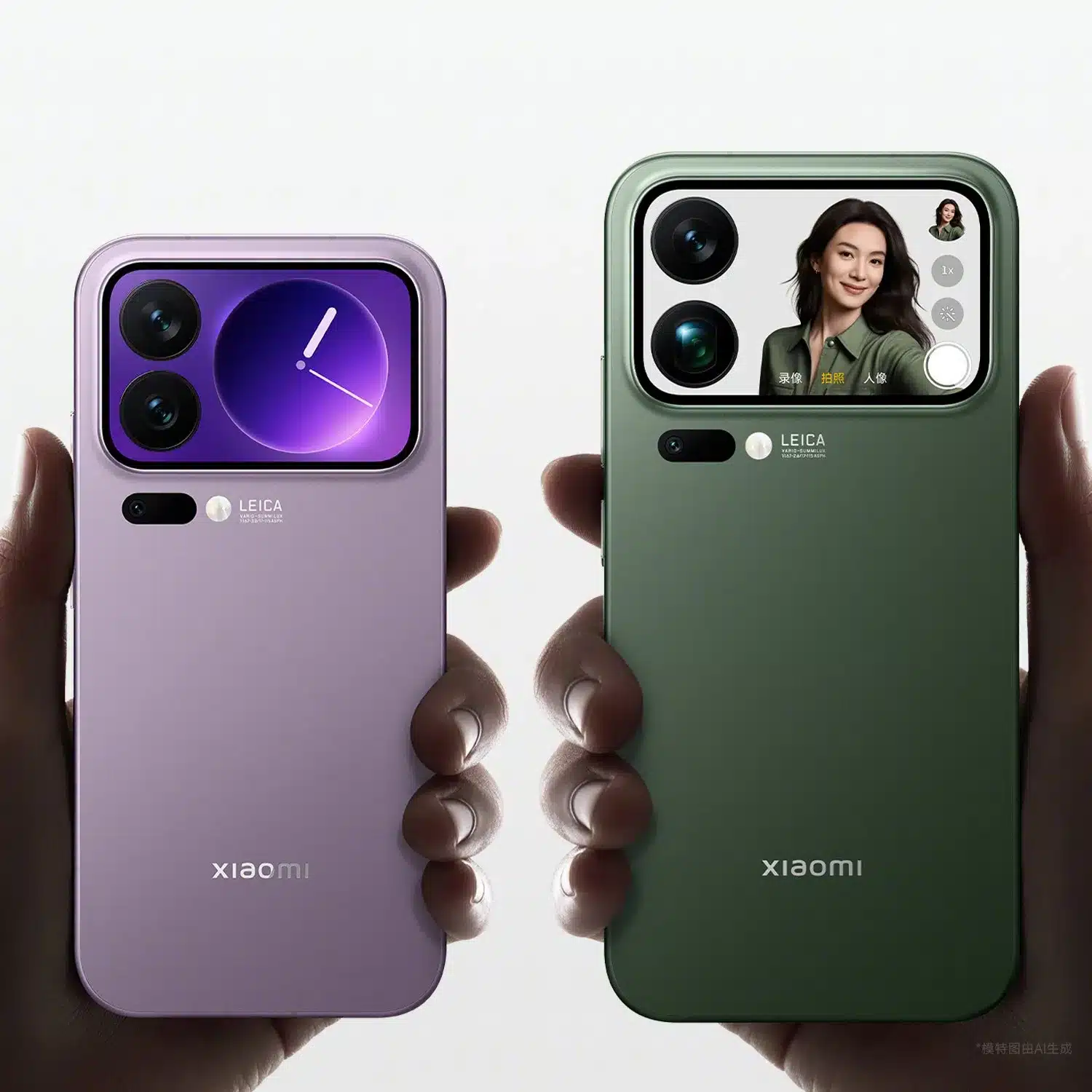
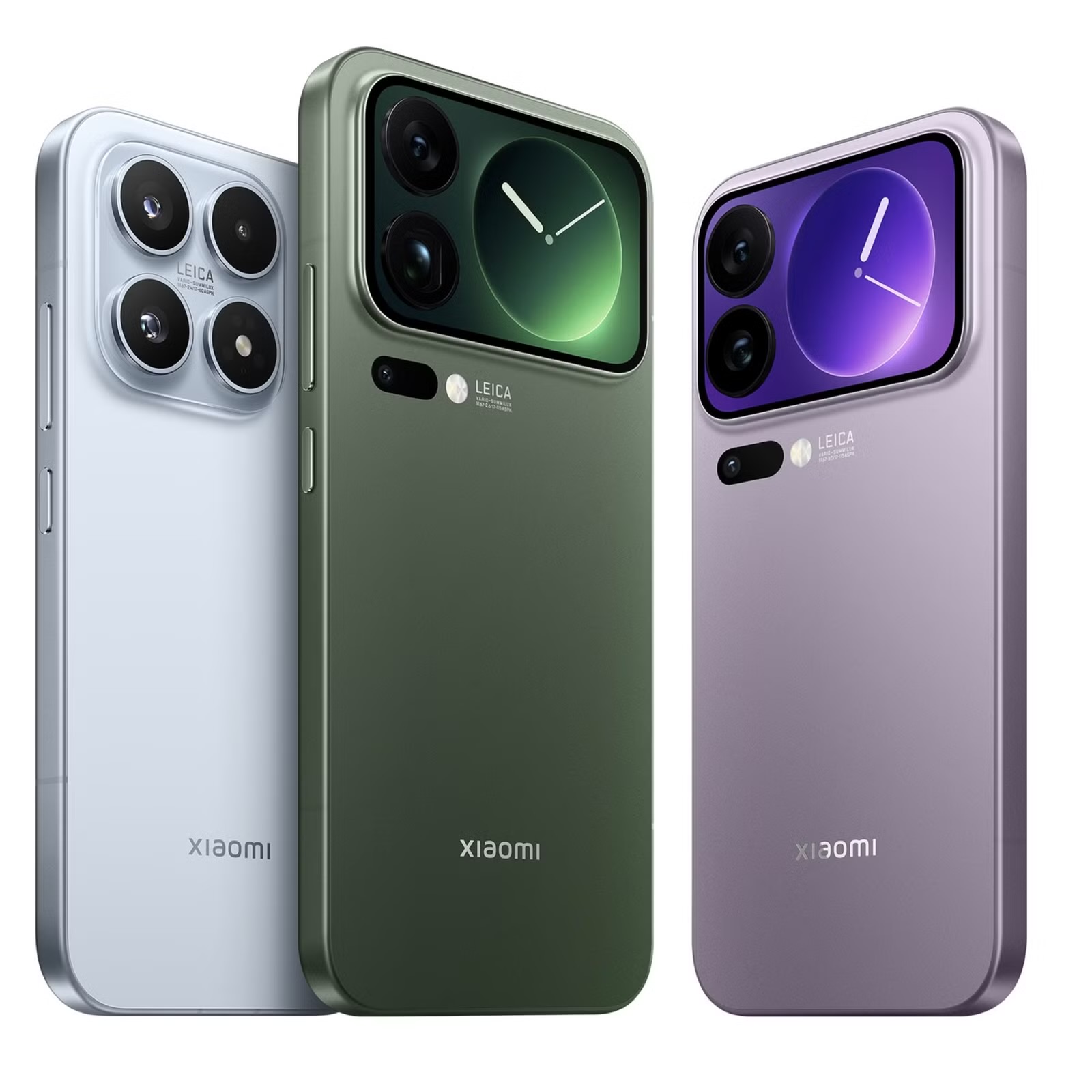
So, the ultra thin phones, for example, the iPhone Air, the S25 Edge, they hit the unique part, but I would say they are worse because of it, because they die literally 30% faster than their more traditionally proportioned brethren. More on these later, though. What was pretty cool though is the rear display from the Xiaomi 17 Pro. It feels like the most fully realized second screen experience. The personalization options are vast and you can even game on the thing. But ultimately, I would say while it does give you tons of small useful tools, there are just very few big features that truly change how you use your phone.
The Minimal phone though is a full Android experience, but with this black and white e- in display that drains much less power and creates less strain on your eyes. But this doesn’t win either because batteries are getting so good this year even without a display like this. And trying to use your apps while they’re refreshing like a slideshow is well its own kind of strain.
So for me, the smartphone that ended up impressing me the most with its uniqueness is Samsung’s Galaxy Z Trifold. I went into my first hands-on thinking it would feel interesting but gimmicky. I came out searching for what the fastest way is to transfer everything over from my iPhone when the thing releases in the UK. It is thicker and heavier when closed up than a normal foldable. But the reward of this enormous 10-in display it has on the inside that’s widescreen, so content really makes the most of it for me finally makes the cost and sacrifices from carrying a foldable actually worth the pain.
The Unkillable Battery Award: Best Endurance
Okay, I mentioned earlier that 2025 has been the year of normal looking phones that just seem to have limitless endurance. But which is the best of these unkillable devices? Mind you, that doesn’t mean which phone has someone just stuffed the biggest battery cell into. Optimization matters, charging speed matters, and most of all, is this still a phone that I would recommend buying outside of its killer battery.
The iPhone 17 Pro Max deserves a mention here. This is the first iPhone to have a 5,000ish mAh cell. When you combine that with Apple’s optimization, it’s the first ever mainstream phone that I would say has spectacular battery life, about 10% longer than Samsung’s.
But then you get to the superized battery phones which are a tier above. But there’s also something that you need to look out for that because of EU regulation, there is actually a cap on how large your battery can be before it is classed as a dangerous good. So quite a few phones that have anything over about 5,500 mAh like the Vivo X300 Pro, which has a 6,510 mAh cell, they actually ship a tweaked version of their phone with a smaller battery to European countries. So, if you buy the phone here, you would only get 5,440, which is why this isn’t winning the award.
The clever thing though that some companies have done is two cells, two separate batteries that each sit under the EU cab, but combine to give you more. It is a little bit less space efficient because you now have to have two separate battery casings, but can’t complain too hard. It gets you the capacity you want, and it makes your charging faster, too, because it allows the phone to split the load of current and heat between the two cells.
All of which to say the real battery champs of 2025 are the phones that have this dual cell design. So that is the Xiaomi 17 Pro Max with a ridiculous 7,500 mAh overall capacity and 100 W charging. The only caveat is this whole rear second display is a little bit of a contradiction if you’re purely optimizing for endurance. Even Realme’s flagship phone, the GT8 Pro, has a dual cell 7,000 mAh capacity with 120 watt charging. You got to love this year of phones.
And then the OnePlus 15 takes that 120 watt charging, pairing it with an even higher capacity of 7,300 mAh. This also might just be the most comfortable that a phone has ever felt in the hands. It’s like a baby’s bottom. Don’t know if that comes across right. To be honest, I’m just not a fan of the camera downgrades that have snuck in here. Compared to the previous OnePlus flagship, every one of these rear camera sensors is smaller, which I’m going to explain why in a bit, but it doesn’t bring joy.
So, the phone that I think wins the unkillable battery award. The phone I would choose to use if battery was the priority is the Oppo Find X9 Pro. 7,500 mAh, basically as big as you can get. A pretty similar spec sheet and design to the OnePlus 15, but instead of a camera downgrade, this is up. This is way up.
The only catch is 80 watt charging instead of the 100 plus that some of these phones can do. But then when you think about the fact that the iPhone is kept at 40 and the Samsung is kept at 45, it doesn’t feel like so much of a problem.
Filmmaker’s Choice Award: Best Camera Experience
Now, where I think this gets particularly interesting is when we talk about the filmmakaker’s choice award. Exactly what it sounds like. It’s the best camera, but with one clarification. This award also factors in the camera experience. Does the battery let you shoot for a long time? Is the screen bright enough so you can see outdoors? Is the camera app really polished and intuitive to use? So instead of thinking this is just best photos, best videos, think of it as which phone would I actually want to use to take those photos and videos.
So let’s get one thing out the way. It is not the iPhone 17 Pro. It is not the Samsung Galaxy S25 Ultra. We’re at a point in the smartphone market where to actually take these cameras to the next level, one must pay the toll. Did it work? Is it nice and scary? You’d have to make your camera sensors wider. And then for those wider sensors to work, you’d also have to make them deeper, potentially making your phone topheavy, cutting into the battery, or god forbid, turning your design into this. So for companies like Apple and Samsung who are not trying to sell millions, they’re trying to sell tens of millions of their flagships, they are going to be very resistant to making changes like this that might feel like a compromise for 90% of people for the benefit of 10%.
read more:
The Deception of Modern Tech Marketing
All of which to say these guys can let themselves out. Pretty similar story for the Google Pixel 10 Pro. It has the highest number of intelligent camera features, but for someone who really knows what they’re doing, you will be able to get more out of phones that have better camera hardware.
And it’s not quite the Oppo Find X9 Pro, although this is extremely close. It actually has almost identical camera hardware to the actual winner, which is the Vivo X300 Pro. A phone that I would actually say is two generations ahead of the already extremely capable mainstream flagships. The thing has a ridiculously bright outdoor display peaking at 4,500 nits. Its battery, while it’s not the very top, is still well enough for a full day of shooting. And the camera itself is special.
If you didn’t know, Vivo, Oppo, and OnePlus are all owned by the same parent company, BBK. That’s why there’s so many parallels between their phones. But what’s really interesting is this year, it feels like they’re really trying to separate who each one is for. I think they’ve decided that OnePlus is pure performance. That’s why the OnePlus 15 gets the fastest chip and huge battery but scaled back cameras and they’ve even scrapped the OnePlus Hasselblad camera partnership that’s been going on for years now. It feels like Oppo is the halfway house. It’s got most of the performance of OnePlus and most of the camera of Vivo because they want this to be the mainstream allrounder flagship.
And then they want the camera enthusiasts to go to Vivo with its slightly scaled back battery but the best camera sensors you can find paired with the most advanced smoothest damn camera software to ever grace an Android phone. And this specialization is kind of nice because it means that if you are someone who is going to take photos and really pour over the details and appreciate the perfect skin tones, the Vivo is worth every cent. Not to mention its 200 megapixel telephoto camera, which is the closest I have ever been to owning spy equipment. Well, second closest.
Last few holidays I’ve been on, I actually left my camera at home just because I knew I had this X300 in my backpack and I way prefer shooting with a phone if I can. That’s actually the main reason we work with Taurus and why you’ll always find me using one of their Oand cases on my iPhone. It lets you shoot from really unique angles like being able to hook this stand around things. It gives you the stability of a tripod anywhere. So, whenever I stumble across a really cool scene that I’m probably never coming back to, I can just plop it down and take a time lapse or a really high quality starry sky shot like this one. And it’s got a strong magnet baked in so you can snap it onto a surface and film yourself with your hands completely free. You can get these for iPhone, Samsung, Pixel, and it’s all topped off with maybe the coolest new finishes ever, like this one, Christmas tree.
The Pocket Console Award: Best Gaming Phone
Okay, enough about cameras. Which phone gives you the single most impressive sustained gaming experience, earning the pocket console award? And I want to stress here, the vast majority of people, even if you’re playing big intensive games, don’t need a gaming phone. I’d actually say the best gaming phone for most people is just the iPhone 17 Pro Max. Apple just improved the thermal performance. The battery is amazing, the speakers are topnotch, and games on iPhone are generally a little more optimized than Android.
However, there will always be some people who decide that they want to go allin. And if you do, you can ek out that little bit of extra performance with the Red Magic 11 Pro. And this is a pretty sick phone because it’s more than just the latest chip, most RAM, and a vapor chamber to keep it cool. This is the first smartphone to also introduce active liquid cooling.
So, vapor chambers, which you’ve now started seeing even in mainstream flagships, are a passive form of cooling. Think of them like a metal block with some water inside. And that water is just continuously evaporating and condensing by itself as the phone heats up, which just helps to speed up the process of getting that heat out. This phone has an actual pump that is actively pushing coolant around the phone. It’s more like the way that a top-end PC’s cooling system would work. And when you combine that with the two other cooling systems also at play, well, you can play Call of Duty or Call of Duty in the sickest way possible.
So, I am crowning this the best phone for gaming. And it does that while also starting at a very reasonable $729. But then again, you can absolutely see where they’ve cut some corners when you start testing the cameras. This is why I’m a little hesitant to recommend gaming phone in the current meta. Also, if you’re wondering, there was no Asus ROG phone this year. Looks like it’s been delayed to 2026.
Grandma’s Choice Award: Best Hassle-Free Phone
And now for possibly the most opposite vibe imaginable. Introducing the Grandmar’s Choice Award, the most hassle-free, it just works well device for someone who’s not as techsavvy.
There’s a bit of a niche, purpose-built option in the Chatsy phone that we tested in our Instagram ads video. It’s very interesting. It’s got this entirely new user interface built around older people being able to clearly understand it, which is absolutely a factor here. and the customer service is insanely helpful, but the hardware is extremely basic considering it’s near $400 price.
Samsung is also a pretty safe recommendation. Their mid-ranges this year, like the A56, they’ve got these spacious, really readable screens. They’ve got big batteries. They’ve got big batteries. They’re durable with good quality glass on the front and back and an IP rating. Plus, Samsung has easy mode, which is essentially built for parents and grandparents.
But I wouldn’t call Samsung the winner. I would say by a fairly healthy margin, it’s actually the Google Pixel 9a. It is a smaller phone, but I just think there is something beautifully simple about Google software that is great for this category. The fact that it’s filled with really helpful tutorials, how it speaks to you at a very non- tech expert level, and also the fact that there is no bloatware, which also means none of that duplication of apps that you see on Samsung. So, no one’s getting confused here about when to use Google Photos and when to use Samsung’s gallery. Google has their own version of easy mode called simple view. And again, it’s extremely effective. All finished off with this camera. While I don’t think the camera on this Pixel, or really any Pixel, has the highest ceiling, what it does have is one of the highest flaws. It makes it very easy to not take a bad photo, and should you still end up doing so, it’s arguably the best toolkit to fix your images afterwards.
One-Handed Hero: Best Compact Phones
Now, the other area where Google Pixel also seems to shine is the one-handed hero category. compact phones that make you question just how did they squeeze all of that in? Because there are a ton of premium compact phones. You’ve got Samsung, you’ve got Apple, you’ve got Xiaomi, you’ve even got all the flip phones. It feels pretty overwhelming.
But then you look closer and you realize that there’s actually a very large range in terms of how much different phones give up to be compact. Like Samsung’s Galaxy S25, for example. This is a safe, completely fine phone, but it is worse in every conceivable way compared to the company’s bigger S25 Ultra. I’d say a little bit less so for the iPhone, but the smaller iPhone 17 does miss out on quite a bit of the battery life that you get on the bigger Pro Max.
This is not the case for Google. I mean, while I don’t think the plus-size Pixel 10 Pro XL is like the best big phone, I would say the smaller 10 Pro is a cracking compact phone because it has just bottled the entire experience of the XL with almost zero compromise, including the battery life.
But there is one phone that I think embodies the one-handed Hero concept, even more so than Google, and that is the Xiaomi 17 Pro. This not particularly large device retains every single one of the bells and whistles from the bigger Pro Max, including by the way this whole second screen. And then unlike the Pixel 10 Pro, which has a weaker than average Google Tensor chip, Xiaomi has a well above average next generation Snapdragon chip. And unlike the Google, which I’d say already has great battery life, this compact phone I would go as far as to say has extraordinary battery life.
If you are specifically looking for one of the flippers, by the way, then I personally rate Samsung Z Flip just a tiny bit higher than Motorola’s Razer 60 Ultra, but they are both great. The Moto’s got a bigger battery and slightly better spec cameras, but Samsung’s thinner. It’s lighter, and I think Samsung’s tuning lets it still take better photos than Motos.
The “Why Does This Exist” Award: Most Disappointing Launch
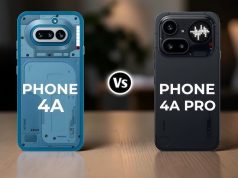
Right, it’s time for the one that I take no pleasure in awarding. Who am I kidding? It’s like my favorite category. the why does this exist award for the most disappointing or confusing launch this year and there’s only one runner up the Nothing Phone 3. I would say nothing’s budget and mid-range phones have been well nothing short of category defining devices. Their flagship though which they waited three full years before making was just very similar but with a spec bump. And then to make it feel like a distinct step up, they added this weird dotty rear screen that actually just felt less cool than the Matrix Lights from their previous more affordable phones. I still don’t think it’s a bad phone. It’s just a slightly disappointing one, especially considering its $800 launch price.
As for who wins then or loses, you know what? No, it’s an achievement. Let’s go with wins. I want to hand it to both of these phones. the two-dimensional twins of 2025, Samsung’s S25 Edge and Apple’s iPhone Air. And it’s not because I think these things are unusable or because I think they’re not a feat of engineering because they are. It’s still impressive to me and I’ve had this S25 Edge for 6 months now. It’s that I think both of these devices are absolutely beautiful traps. this shiny, alluring new form factor that is going to sway a lot of people in the short term when they’re making that buying decision.
But then long term, when you stop noticing that form factor and the battery degradation starts to set in, I think most of those users will start to become worse off because of it, they’ll start to wonder, why are my photos so grainy when I try and zoom in? Why am I having to use power saving mode every day? Why is my phone starting to feel choppy after 20 minutes of gaming? Which are not things that you want to be wondering when you have still forked out a grand to get one of these.
### Best Budget & Overachiever Awards
So, what if you wanted to specifically protect your wallet? If you wanted to spend no more than $300, but get the most smartphone possible. Well, as with every other year before, Poco is waiting for us with open arms. I got to say, their X7 Pro, excuse my extremely bright Avengers edition over here, this thing is the most appealing that a Poco has ever been. The fact that $300 now gets you a phone that can take great photos on its 50 megapixel main camera is extremely readable in any lighting with 3,200 nits of peak brightness and lasts for at least a day and a half on a charge with its 6,000 mAh battery is so cool.
So, this is the clear spec maxing option. When you factor in though the overall phone experience, I would side very slightly with the CMF Phone 2 Pro by nothing. You are getting a bit less hardware, but it’s cheaper. At $250, it’s got that nothing level of polish that makes it feel a little more expensive than its pairedback stats might suggest. The software is really optimized. The bloatware is minimal, and the phone takes surprisingly good photos with two 50 megapixel cameras on the back. Oh, yeah. Plus, the thing’s modular with the ability to screw in a stand or camera lenses or just swap out the back plate entirely. So, there are a couple of other options from nothing floating around this $300 price point, but frankly, the CMF phone is the best value option.
The overachiever award, though goes to the mid-range phone that gives you far more than you expected, enough to take it into flagship territory and even beyond in some ways. And the phone that wins this award in 2025 is probably the most immediately impressed I’ve been in years. So, this is yet another one of those categories where I don’t think the Apples and Samsungs take it. Those are companies whose entire business model revolves around protecting their flagships and who don’t particularly fight to overd deliver on value.
And even these phones, the very well-rounded Xiaomi 15T and 15T Pro, which now run the slicker, more stylish Hyper OS3 Android skin, the competition is heated enough this year that even they can’t burn through. The two phones that truly do punch above their weight are one, the Realme GT8 Pro that I mentioned earlier. This is by far the most stacked smartphone to ever come out of this company. Like, think of a current cuttingedge smartphone spec. This thing has it all for around $750. And it comes with a screwdriver so that you can swap the shape of your camera module into a rectangle. It’s probably the strangest extra on a phone so laser focused on price to performance.
But even with its screwdriver, it’s not the winner. I am giving that award to the Poco F8 Ultra. A phone that has not just surpassed my expectations, it has walked in. It has slapped them across the face and rewritten them from scratch. Because spec-wise, this is very close to the extreme realme phone, but it’s a little bit more affordable. It’s $679. It actually looks really smart and unique with this denim finish that has actually immediately become one of my favorite smartphone finishes because it’s so grippy. It doesn’t scratch at all and it shows no fingerprints.
And then the speakers here are incredible. The phone’s a partnership with Bose. And so what they’ve done is built an entire extra subwoofer on the back, which is all I’ve been dreaming of from a phone for a long time now. I will say, temper your expectations. This doesn’t suddenly turn your smartphone into giant Bluetooth speaker levels of depth or richness, but it’s enough to make even one of the best sounding phones, the iPhone 17 Pro Max, sound a little compressed side by side. And I think that’s quite the achievement.
Overall Smartphone of the Year
Which leaves us with just one award to give. for the person who wants to pay flagship money and just wants the very best.
So, the contenders are Samsung S25 Ultra, of course, for just being so well-rounded. Everything about it is at least good. It’s just that we’re at a stage now where the chip and battery inside are fairly outclassed.
iPhone 17 Pro and Pro Max. I love the focus on battery and I would actually say the improved signal has been one of the most impactful upgrades for me in the last 5 years, but it’s also not this because Siri and to be honest, iOS in general just feels like it’s lagging behind.
Xiaomi’s 17 Pro Max is also fascinating. It’s just for me, I wouldn’t deprioritize the cameras like this to prioritize a second display.
I absolutely love the Vivo X300 Pro, as you’ve seen, and it is so close to perfect. It’s just slightly lacking in the battery department to be called winner, which means overall smartphone of the year is going to its very similar cousin that isn’t, the Oppo Findex 9 Pro. I think this the closest we’ve ever been to a flawless phone. The only flaw being that you might struggle to get one depending on where you live. They even pre-installed the screen protector.