The “Enshittification” of Tech: Why Everything You Use is Suddenly Worse
Amazon sucks right now. Uber sucks right now. Netflix sucks. Facebook sucks. Instagram sucks. Every big tech company is changing in front of our very eyes and I know I usually try and see the bright side of tech, but for this article, I just want to be very brutally honest. I think most of these services we use are worse than you think and I want people to do something about it.
The Pattern of Tech Decay
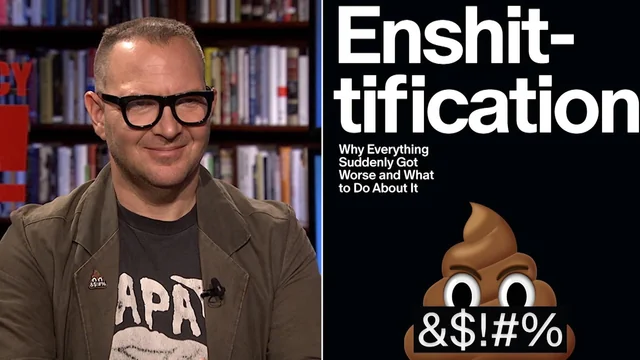
The first thing to understand is basically every big tech company follows the exact same pattern something that a guy called Cory Doctorow summarized really well with the term “enshittification.” See, when any of these companies first starts, their only chance of succeeding is to go above and beyond for their users by solving a key problem.
The Rise and Shift of Uber
Let’s take Uber for example. Uber came in in 2009 and I remember first using it around that time and thinking: this is the end for traditional taxis. This is far more convenient; the taxis find me instead of the other way around, the drivers are friendlier, the cars are cleaner—and it did all of that while being so much cheaper. I mean, Uber at the start was 50%, sometimes 30% of the price of a traditional taxi. And so it’s not surprising just how quickly people flooded onto Uber. I remember that within just about a year of it becoming operational, it went all the way from party trick to an essential app that everyone should have.
But then things changed. As soon as Uber felt like they had the user side of the market cornered—completely locked into the app—they switched focus to the other side: the drivers. Because the users aren’t going anywhere at this point, if Uber can manage to control them and also the drivers, Uber owns the market. It means the users will have to stay where the drivers are and the drivers will have to stay where the users are.
So they sweetened the deal for them. Uber started handing out sign-on bonuses for new joiners; they started giving cashback on fuel and discounts on car maintenance. They paid their drivers 80% of what the app made, and the best part of it was surge pricing. Anytime there was a pickup in demand, drivers could well earn two times, three times, sometimes more. I remember coming out of a music festival once thinking, “I don’t need to pre-book my car, Uber will sort me out,” only to realize that because I was coming out with crowds of other people, my only way to guarantee that I got an Uber was to outpay all of them. With five times surge pricing, I paid £100 for a 15-minute cab ride.
The Master Plan: Harvesting the Surplus
There is a third stage to this master plan. Because what does Uber do when they have the users—when they know they’re by far the most convenient way to hail a cab—and they have the suppliers (the ex-taxi drivers, the restaurant takeaway drivers, the package delivery drivers)? Well, that is when true enshittification occurs.
They gave users a surplus at the start to make their app essential, then shifted to giving suppliers that surplus to get them all on it to build monopoly power and make it much harder to get a car outside of Uber. But this is the point where Uber and every other big tech company in this position will take all of that surplus for themselves.
Because, a) well they can, but also b) because by the time a company reaches this stage, more than likely they are a public company, which means that the decisions aren’t being made by one potentially passionate founder, but instead just many, many shareholders. And because shareholders aren’t usually as invested in the long-term health of the business—they just want the business to earn quick money so that they can cash out—their objectives often boil down to:
-
How do we make the users pay up until the absolute limit of what they’re willing to, but just not past it?
-
And then, how do we pay the suppliers the absolute least that they’re willing to take, but just not less than it?
The Reality of Tiering and Subscriptions
So this is what that enshittification looks like in practice, and it all starts with tiering splitting the base service up into multiple tiers all at different price points. On the face of it, that sounds great. On Uber, for example, it means that you can now get:
-
Priority: If you want faster.
-
Comfort: Newer cars with more legroom.
-
Exec: High-end cars with top-rated drivers.
-
Lux: The very, very top end.
Think about it: now that they offer all of these options, what happens when you’re just getting a normal Uber? Now you get extremely long wait times because no driver who can charge Exec prices is going to take a ride for normal prices. You get all the drivers who don’t qualify for high-rated service and all the cars that don’t count as new enough for Comfort. And trust me when I say the requirements for Comfort are not very high.
This idea of splitting things up to offer more premium services isn’t inherently bad; it’s just the way these companies achieve this is much less about making the experience better for the people who are paying more, but much more about just making it worse for the people who aren’t. Uber isn’t changing the pool of cars on the road to accommodate these tiers; they’re the same cars, the same people with the same training, but it’s just now they’re segregated in a way that each user pays the maximum they’re willing to pay and the service provided is the bare minimum for that price.

Netflix and the Ad Invasion
Or take Netflix. When Netflix first started, it felt revolutionary. I can pay £5.99 a month—which is cheaper than an average movie ticket nowadays—and get all of this ad-free. But then Netflix introduced 4K quality, which instead of just being added to the base service, became part of a separate tier now being charged at £17.99 a month. Then they actually went as far as to introduce adverts back into your movies after the whole deal about this being the way to watch movies without adverts. Unless you upgrade to the middle subscription tier which is £10.99, you’re going to get those adverts.
Netflix isn’t even the worst offender, to be honest. At least their ad-supported tier is cheaper than the normal tier, whereas Now TV and Amazon Prime just stuck ads into the normal tier. The point is, tiering is not being used to benefit the user; it’s being used to charge you more if you’re willing to pay more and then give you the minimum acceptable experience if you’re not.
The Subscription Trap
That brings me to subscriptions in general. Subscriptions on their own can be fine. They can be a way to make services more accessible instead of having to frontload a big upfront cost. They can be a way to force companies to continue to provide value and updates over a period of time.
But the way that these big tech companies are using subscriptions now has meant that we’re often not paying those monthly subscriptions instead of the bigger upfront costs; we’re paying them both. And you’re actually getting a worse service now whilst paying for a subscription than you were originally for free.
The Amazon Prime Example
Like Amazon, for example. The entire purpose of Amazon Prime was unlimited one-day deliveries. So why is it that now we’re also having to often pay to get the fastest delivery and for many products actually having to hit a minimum spend just to get that perk? Which is how every online store has ever worked since the very beginning, but without needing to pay a monthly fee.
Uber’s Rising Costs
For Uber, I regularly used to take Ubers to go see Drisha early on when we were dating. She was about 120 miles away and it used to cost about £120. But over the last few years, I have seen that price not just creep but soar up to £150, £200, £250, and now £300. Uber has gone from half the price of a normal taxi to, in a lot of cases, actually more expensive than just calling up your local cab company and pre-booking a car.
Remember, that’s for the lowest tier, which because this tiering exists, means that you are specifically selecting a car that’s at least 8 years old with a driver who’s completed less than 100 trips or someone who just hasn’t been able to keep a good rating.
Read More:
GPT-5 vs GPT-4o: Is the New ChatGPT Actually Better?
And you remember that surge pricing we talked about earlier? That still exists, but now you just don’t see it. Instead of Uber telling you that you’re about to pay three times what you should be paying, it just does it so that you start losing your reference point of what the journey even should cost. That is where the subscription service comes in to save the day: Uber One. I’m paying for it every single month because it gives you a 5% discount on your rides and free delivery on your Uber Eats food orders.
The point I’m trying to make here is that if Uber is just inventing the price—if Uber is just deciding how much it can charge you for this particular journey as opposed to giving you an actual breakdown of why it costs what it costs—then a 5% discount on a made-up price doesn’t actually mean anything. You’re still paying far, far more than you used to just a few years ago for the same rides. And now you have a monthly expense as well that further ties you into using Uber and Uber only for all your driving and delivery needs.
Welcome to my website, BMathz. If you’re enjoying this rather painful article, it’s worth noting we do try very hard.
Platform Fees and the “Uber Eats” Problem
If you’re wondering why that Uber now costs £300, well, it’s not because the drivers have started earning more. The biggest way that companies like Uber and Amazon, once they become the default option, start to take all of that surplus away is simply by extracting the largest cut that they possibly can from every transaction. Let’s call this the platform fees.
Let me show you Uber Eats for a minute. So I fancy some McDonald’s chicken nuggets. The first thing you’ll notice is pricing. Almost every item of food on Uber Eats is between 10% and—no joke—100% more expensive than it actually is in person. 20 chicken nuggets for £6.99? That seems like an awful lot.
Then when we go into our basket, oh look at that: “Add £8.19 to save with Uber One.” Again, notice just like with Amazon Prime, Uber is trying to frame this as if I’m getting some sort of perk when actually free delivery is something that I’m actively paying a monthly subscription just to get. The app is denying that benefit until I hit a minimum spend—which by the way, almost always means wastage. It’s encouraging people to order more than they want to order.
Then we see “Priority Delivery” for £2.49. To be very clear, priority delivery isn’t some sort of hyper-accelerated personalized service; all it means is your driver doesn’t take stops on the way to you. You know, exactly how every takeaway service ever used to work. This is a great example of tiering. When Uber Eats first started, it was just an assumed thing that of course your driver is going to come straight to you to deliver your order. Now, you want fast, you pay for fast.
Hidden Fees and Service Cuts
I go priority, and then you scroll down and oh, priority delivery is actually being charged at £4.78. That’s because it’s actually on top of an already existing base delivery fee. And then there’s just “Fee.” If I click that, it says part of that is the “small order fee” for orders less than £10. Why is there a separate delivery fee for the fact that my order is small when I already paid a priority delivery fee?
Then there’s the service fee. This is what Uber wants you to think of as their cut, but the truth is Uber is taking a slice out of every single part of this pie. McDonald’s chicken nuggets are £4.49 on the McDonald’s app, which basically means that just for delivery, Uber is taking 70% of the value of the order. What a joke.
It is mortifying how much they’re exploiting the consumer here. Amazon is just as bad. The other day Drisha was buying a batch of mini little hampers for some gifts—£12.99 was the absolute cheapest she could find them on Amazon. Within a minute of browsing outside of Amazon, we found them for £4. It’s so easy to fall into the trap of thinking, “Well, I’ve paid my delivery fee, that’s what I’m paying the subscription cost for; there’s no way that this thing is going to be cheaper in another store.” That’s what they want you to think. But the truth is Amazon is charging for Prime, charging extra for delivery, charging sellers to sell, and then charging you extra to buy.
Social Media and the “Social Suicide” Trap
You can even notice this effect with free platforms. Social media, for example—even though companies like Facebook, Instagram, TikTok, and YouTube aren’t directly charging you, they will still absolutely find ways to maximize their earnings from you once they know that you’re in.
Once Facebook had got everyone to sign up by being this open haven where you keep connected with everyone you know and love, they became very aware that no individual person could just leave—that would be social suicide. So Facebook could crank that money-making lever as much as they wanted to. They could fill it with ads, charge companies to target you, and curate your feed so that the people you follow are no longer commands of what you want to see, but just suggestions that are quickly discarded as soon as Facebook realizes what they can show you to make more money.
Dark Patterns: The Psychology of Deception
Where this all gets really deceptive is “dark patterns” basically tricks that companies employ to make you do things that you didn’t mean to do.
I signed up to using an app called Piccolo. It’s a social drinking game with a 3-day free trial. But then it’s £4.49 per week for a game that’s clearly been designed to be played once a month at most. I went for the free trial, I played the game with my friends, we were drinking, so I didn’t specifically remember to cancel it when I woke up the next day. It took half a year when my accountant asked what this £4.49 every week was going to Apple that I realized. My penalty for playing one phone game for 2 hours one night? About £110.
Manipulation of the Default
Another dark pattern is the manipulation of the default option. I shop a lot on Amazon because they’re basically the only company whose delivery infrastructure I can mostly rely on. But now Amazon often pre-selects the slower delivery option with no way to stop it doing that. You’re charging me a monthly subscription for unlimited next day delivery, but then assuming that unless I specify otherwise, I’d rather get the slower delivery? That is absolutely a dark pattern.
The Difficulty of Cancelling
Honestly, at this point, there is an intricate web of dark patterns these companies are using:
-
Deliberately confusing website design intended to fool or confuse the customer into not canceling.
-
Flipping the “Continue” and “Back” buttons between each page during the cancellation process.
-
Aggressively offering discounts only right before you decide you want to cancel.
-
Encouraging you to “pause” your subscription so it automatically resumes later.
-
Guilt-tripping you with things like “Continue your deactivation only if you are a boring person.”
A study by Email Tool Tester found that the average consumer encounters over six dark patterns when trying to cancel any subscription service nowadays.
The PlayStation Experience
I experienced one of the worst examples of this just last week with PlayStation. I wanted one month of online play. Simple, right? But wait—there’s no option to just buy one month anymore. It assumes you want to stay subscribed forever. So I buy the essential package and try to cancel straight away. The cancel button is hidden. I had to Google to find that you have to go into Users and Accounts > Account > Payment and Subscriptions > Subscriptions > PlayStation Plus.
Then it asks if you’d rather change your plan. Then “Are you sure? You’re about to lose these benefits.” Then yet another window asking for your reasons. It’s not even just about one company; it’s the fact that every big tech company doing a subscription is itself part of the problem.
The Content Fragmentation Loop
In most cases, the more subscription services there are, the worse each one gets and the more that you end up having to pay just to be able to still do the things you want to do. You have a limited amount of time. If you subscribe to Netflix at £5.99 to watch all the big blockbusters, that’s a cracking deal.
But then Disney+ comes along, Apple TV+, Amazon Prime Video, Paramount+, Peacock—and every single one takes the rights for one or two big exclusive shows. Before you know it, you’re paying for six different services. Combine that with tiering, and you’re paying £10-£20 per month to each one for the ad-free experience. Your time hasn’t increased. The amount of content you consume hasn’t changed. You’re just paying movie rent to more companies. It feels like we’ve looped all the way around and now we’re back in the same place we were—except now you don’t own anything.
I was counting up my own paid subscriptions:
-
Work: Epidemic Sound, Slack, Trello, Adobe Creative Suite, Frame.io, Surfshark, Twitter Blue, Google Drive, Uber One, and various plugins.
-
Personal: Netflix, Spotify, Vodafone, Tidal, Apple TV+, Apple iCloud, Amazon Prime, YouTube Premium, Delivery Plus, PlayStation Plus, Xbox Live, Nintendo Switch Online.
The total I spend on subscriptions in a month is £1,212. Oh my god.
Why Companies Love Subscriptions
Subscriptions and the dark patterns that come with them aren’t going anywhere. They give predictable regular revenue—the holy grail for businesses. It’s much easier to say to investors “we have 1,000 users and 950 will pay again next month.” It’s easier to get people in with a cheap subscription and then upsell them with add-ons. Subscriptions also create “lock-in.”
Look at the revenue: if a company sells 100 products for £10, that’s one thing. But if they sell 100 subscriptions for £2 a month, it overtakes the individual purchases very quickly and just keeps accelerating.
What Can We Do?
So what do we do about it?
-
Cancel Immediately: When you sign up to a subscription you only want for a month, just cancel it straight away. You’ll get that first month and ensure nothing past that.
-
Rotate Services: If you want to watch everything, try rotating—subscribing to one at a time, binging what you want, and then moving to the next.
-
Push for Policy: We should be pushing for governments to enforce smoother switching between platforms and focusing on making platforms deliver on their initial promises.
A social media platform should first show you what you signed up to see, not what drives the most retention. Amazon should show the product it genuinely thinks is best matched to your search, not who paid the most to advertise. Google Search should show reviews that answer your questions, not just Google’s own reviews.
One of the few subscriptions I have that I genuinely think flies in the face of most of this is Surfshark VPN. It actually fixes the mess created by other services like Netflix who don’t buy licenses for all shows in all countries. It doesn’t have weird catches about staying in the same household, and most importantly, instead of enshittifying themselves, they have actually gotten better. The app is cleaner, there are no ads, and the features keep going up.
Big thanks to Cory Doctorow, by the way. I’ve been reading a lot of his stuff while planning out this article. Catch you in the next one. BMathz.